

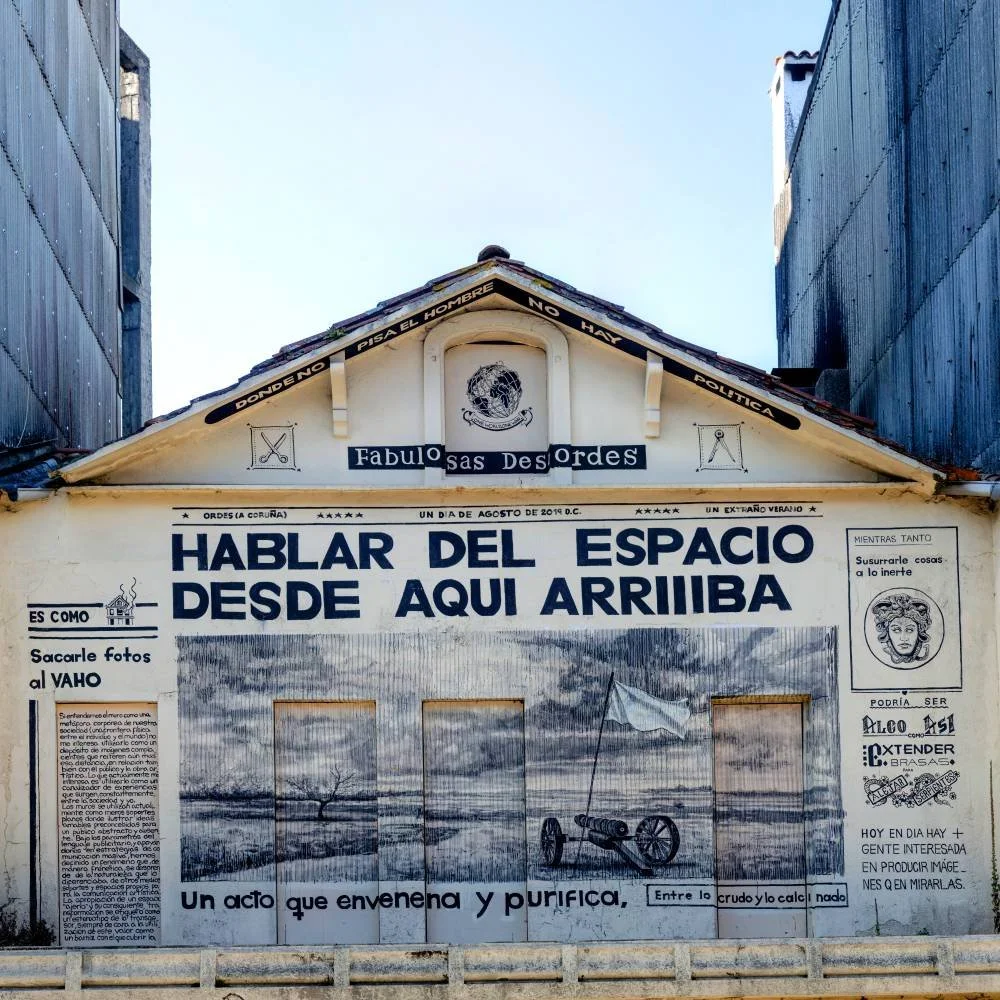
Daniel Muñoz: “La obra surge del espacio. No al revés”
El artista extremeño habla sobre arte público, escucha activa y cómo una residencia en Manila sería más una conversación que una intervención.
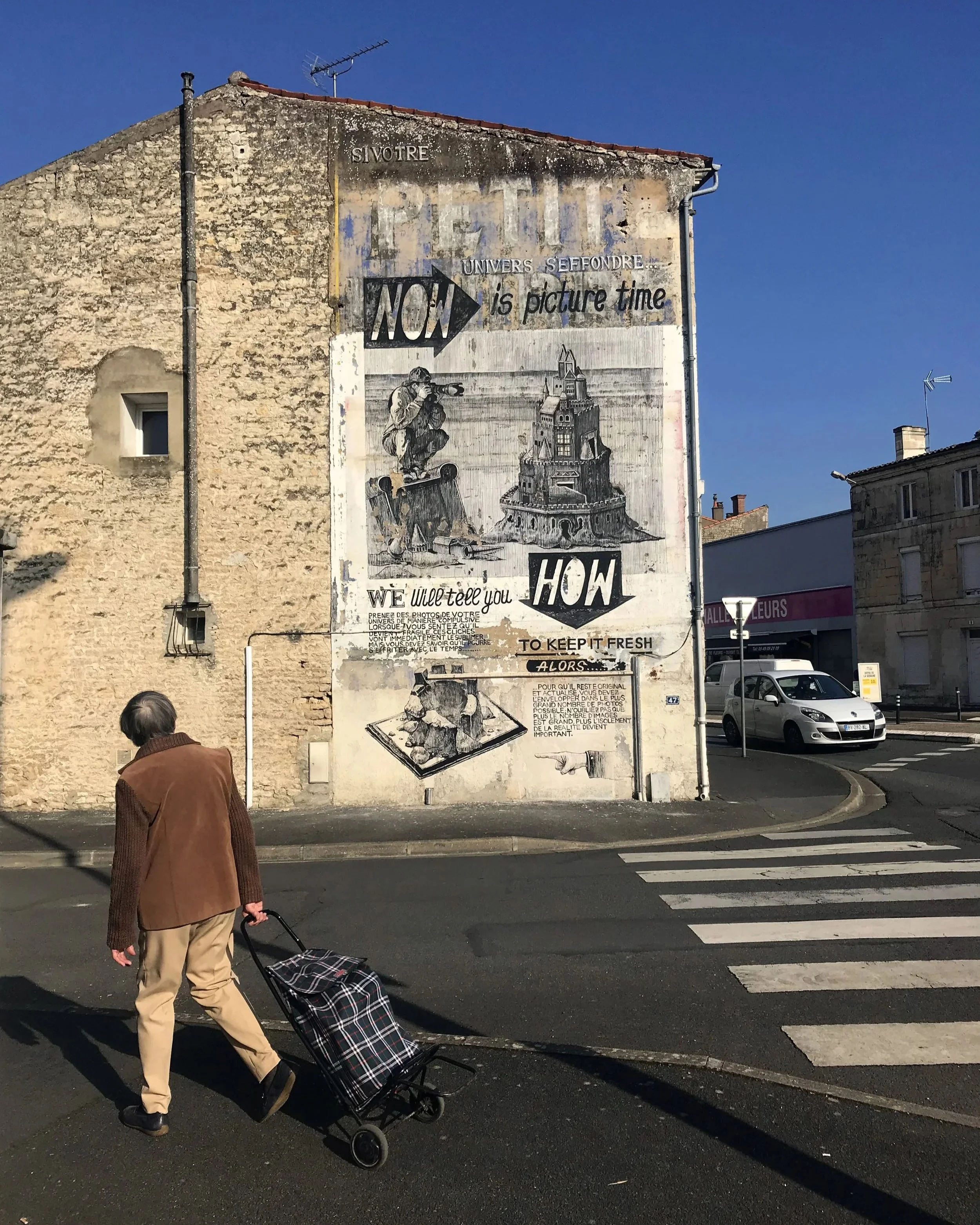
Hablar con Daniel Muñoz —el artista extremeño— es desmontar la idea del muralista que llega, pinta algo gigante y se va sin mirar atrás. Lo suyo va por otro lado: escucha, observa, se empapa del lugar. Su arte no empieza en un estudio con café y playlist: arranca en la calle, en los archivos, en las esquinas donde nadie mira pero todo habla.
“No llego con una obra bajo el brazo”, dice. “La obra surge del espacio. No al revés”. Y esa frase no es pose: es la base de una práctica que se toma en serio el lugar, el tiempo y, sobre todo, a la gente. Ahora hay una posibilidad real de que Daniel viaje a Manila para una futura residencia artística. No ha ido aún, pero ya la está pensando. Y no como un destino más, sino como un contexto denso, lleno de capas históricas, contradicciones, relatos cruzados. Lo que le atrae no es la postal, sino la tensión. Colonialismo, espiritualidad, turismo, mitología urbana… todo eso ya lo interpela, incluso a distancia. Y si llega a ir, no será a “hacer obra”. Para él, una residencia no es un ticket para producir y cumplir. Es una forma de estar, de investigar, de escuchar con calma. “Si no hay tiempo para conectar con el territorio, no hay obra que tenga sentido”, dice. “No es una exigencia de artista; es una cuestión ética”.
Esa ética se nota especialmente cuando trabaja fuera de su entorno habitual. Daniel no llega con un estilo fijo ni un mensaje cerrado. Sabe que sus símbolos pueden perder sentido —o tener otros— en contextos distintos, y por eso no los impone. Los revisa, los negocia, los adapta. La obra, si sucede, tiene que surgir desde ahí: desde lo compartido.
Tampoco busca muros bonitos o fondos neutros. Él necesita lugares con historia, con ruido, con capas. Espacios que digan algo, aunque no sea obvio. En su práctica, el lugar no es soporte: es materia viva. La arquitectura, las grietas, el barrio, la energía… todo eso forma parte del proceso antes del primer trazo. Sus piezas suelen tener una ambigüedad visual, sí. Pero no son neutras. Siempre están atadas al lugar, a su contexto, a su gente. No vienen a explicar, sino a sugerir. No buscan likes: buscan preguntas.
Y en eso también va implícita una crítica. Daniel no comulga con esa figura del artista que va, deja su marca, firma y se larga. Le interesa otra lógica: la de compartir proceso, la de involucrarse. Lo que queda en la pared es importante, sí, pero más lo es lo que pasó antes, durante y después.
Por eso, si Manila se cruza finalmente en su camino, no será un viaje más. Será una oportunidad de trabajar desde la escucha. De construir algo con la ciudad, no sobre ella. De activar una conversación que aún no ha empezado, pero que ya se intuye.
Va —si va— a hacerlo con Manila. No en ella.
Porque ese matiz lo cambia todo.
Daniel Muñoz: “The work comes from the space. Not the other way around.”
Talking to Daniel Muñoz—the artist from Extremadura—is enough to dismantle the idea of the muralist who arrives, paints something massive, and leaves without looking back. His approach moves in a different direction: he listens, observes, absorbs the place. His work doesn’t begin in a studio with coffee and a playlist; it starts in the street, in archives, in the corners no one looks at but where everything speaks.
“I don’t arrive with a finished piece under my arm,” he says. “The work comes from the space. Not the other way around.” And this isn’t a pose—it’s the foundation of a practice that takes place, time, and above all, people seriously. There is now a real possibility that Daniel will travel to Manila for a future artist residency. He hasn’t been yet, but he’s already thinking about it—and not as just another destination. He sees it as a dense context, full of historical layers, contradictions, and intersecting narratives. What attracts him isn’t the postcard image, but the tension. Colonialism, spirituality, tourism, urban mythology—these elements already speak to him, even from a distance.
If he does go, it won’t be to “make work.” For him, a residency isn’t a ticket to produce and deliver. It’s a way of being present, of researching, of listening slowly. “If there’s no time to connect with the territory, there’s no work that makes sense,” he says. “That’s not an artistic demand; it’s an ethical one.”
That ethic is especially evident when he works outside his usual environment. Daniel doesn’t arrive with a fixed style or a closed message. He understands that his symbols can lose meaning—or take on new ones—in different contexts, and so he doesn’t impose them. He revises them, negotiates them, adapts them. If the work happens, it has to emerge from that shared space.
He isn’t looking for pretty walls or neutral backdrops either. He needs places with history, with noise, with layers. Spaces that say something, even if it isn’t obvious. In his practice, the site isn’t a surface—it’s living matter. Architecture, cracks, the neighborhood, the energy of the place—all of it becomes part of the process before the first mark is made. His pieces often carry visual ambiguity, yes, but they are never neutral. They are always tied to the place, its context, its people. They don’t try to explain; they suggest. They don’t seek likes; they seek questions.
There’s also an implicit critique in this approach. Daniel doesn’t align himself with the figure of the artist who arrives, leaves a mark, signs it, and disappears. He’s interested in another logic—one of shared process, of involvement. What remains on the wall matters, of course, but what happens before, during, and after matters more.
That’s why, if Manila ultimately crosses his path, it won’t be just another trip. It will be an opportunity to work from listening. To build something with the city, not on top of it. To activate a conversation that hasn’t yet begun, but can already be sensed.
He would go—if he goes—with Manila.
Not in it.
Because that nuance changes everything.